Stay Connected Anywhere with the Best International eSIM Plans
A traveler landing in Tokyo can instantly connect to a local network without swapping a physical SIM, thanks to an international eSIM. This embedded digital profile replaces plastic cards by downloading carrier data directly onto your phone. It offers seamless global connectivity at local rates, letting you activate a plan before departure and manage multiple networks from a single device.
Why Travelers Are Ditching Traditional Roaming
Standing at the airport gate, Sarah used to dread the arrival text: *”Welcome to Japan. Daily roaming: $12.99/MB.”* Now, she scans a QR code for an international eSIM before the plane doors close. The reason is brutally practical: traditional roaming ties her to a single carrier’s extortionate daily pass, while an eSIM lets her buy a 10GB Japan plan for the price of a coffee. She lands, turns off airplane mode, and her Uber app loads instantly—no SIM swap, no store visit. The breaking point came in Barcelona last year, when her roaming cut out mid-Google Maps walk; with eSIM, she installs two separate data profiles on her phone, keeping her local number for calls and a second eSIM for high-speed data. Travelers ditch the old way because eSIMs kill the “find a Wi-Fi password” stress and the “I’ll just use maps offline” lie, giving them real connectivity from the second they step off the plane.
The hidden costs of physical SIM cards abroad
Beyond the advertised price of a physical SIM abroad, travelers face hidden logistical costs. You must locate a vendor, often navigating language barriers and unfamiliar streets, which consumes time and transport money. The installation itself demands physically swapping your primary SIM, instantly disabling your home number for critical two-factor authentication or banking alerts. Furthermore, losing or damaging this tiny chip mid-trip forces a costly, disruptive replacement hunt, whereas an eSIM profile is remotely re-downloadable without any tangible hardware.
- Time wasted locating a physical SIM vendor and translating plan options.
- Risk of losing or damaging the physical SIM, requiring an expensive replacement.
- Forced downtime of your primary number during the SIM swap process.
How eSIM technology eliminates the hunt for local vendors
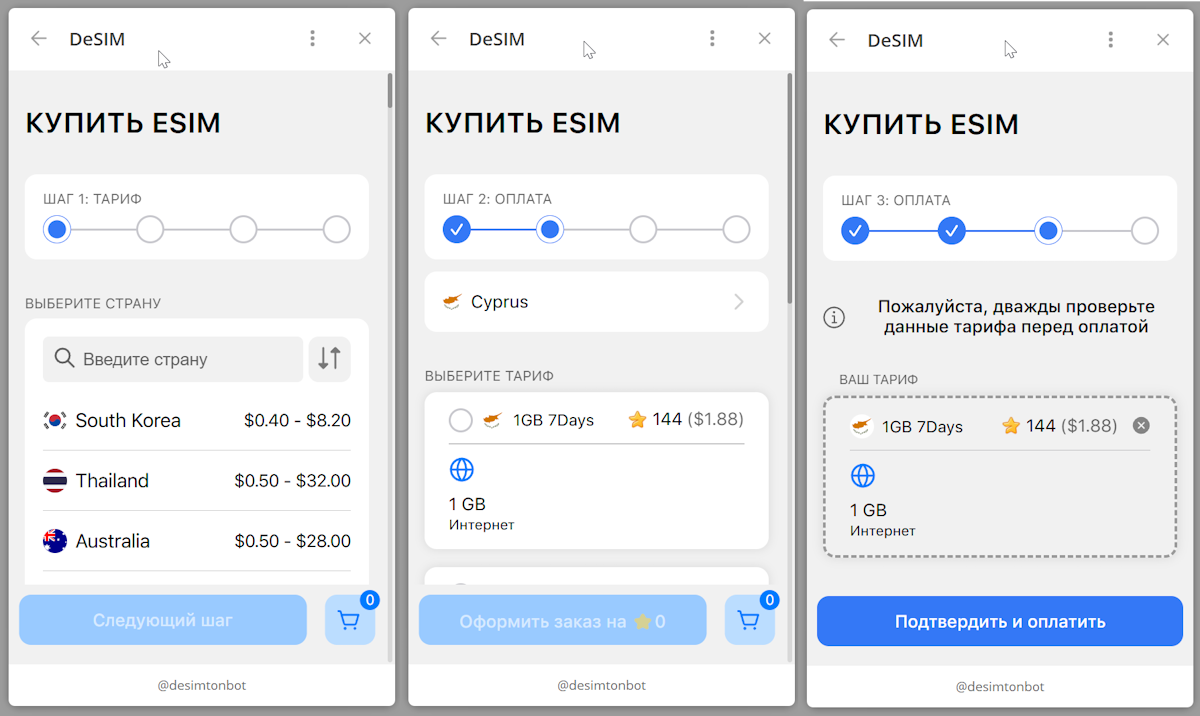
Forget landing in a new country and immediately stress-scanning airport kiosks or hunting down a cramped mobile shop. eSIM technology kills that entire errand. You buy and activate a local data plan directly from an app or website before you even board your flight. No need to negotiate prices with a vendor in a foreign language or carry a physical SIM card to swap out. The setup happens to your existing phone instantly, letting you step off the plane with connectivity ready. Pre-travel plan activation means the vendor hunt is completely removed from your trip.
Q: Does this eliminate the need to find a physical store for a SIM card? A: Absolutely. With eSIM, you skip the physical store entirely; you purchase and install the plan digitally from anywhere, even your home couch.
Real-world savings for short trips and long-term stays
For a weekend getaway, an international eSIM eliminates surprise fees by letting you buy a tiny, cheap data bundle instead of paying for a full monthly plan. For long-term stays, you save dramatically by stacking monthly eSIM plans from local providers, often costing a fraction of what your home carrier charges for sporadic use. The key sequence: choose the right eSIM plan for your trip length.
- For short trips, purchase a low-gig, multi-day pass that expires automatically.
- For stays over a month, buy a 30-day plan and renew it monthly instead of using daily roaming rates.
You avoid both the activation fees of physical SIMs and the pricey daily caps of traditional roaming on any timeline.
Choosing the Right Virtual SIM for Your Trip
When choosing the right virtual SIM for your trip, prioritize coverage maps over price. Verify the international eSIM provider uses local Tier 1 networks in each country you visit, not just roaming on a single foreign carrier, to ensure stable 4G/5G speeds. Select a data-only plan unless you need a dedicated voice number; VoIP apps handle calls cheaper over eSIM data. Immediately check if activation occurs at first network connection or upon purchase—instant activation prevents wasted days without service. Finally, read the Fair Usage Policy; many “unlimited” plans throttle to unusable speeds after a few GB, making a fixed high-data cap more reliable for navigation and uploads.
Key factors: coverage zones versus price per gigabyte

When choosing an international eSIM, the primary trade-off is between coverage zones versus price per gigabyte. A regional eSIM covering an entire continent offers convenience but typically costs more per gigabyte than a local plan locked to a single country. Conversely, a cheap global plan might throttle speeds or deprioritize data in remote zones, rendering low prices useless. Your decision hinges on itinerary density: hopping between borders favors broader zones over raw gigabyte savings, while stationary stays benefit from purchasing cheaper, country-specific data packs. Evaluate whether the premium for seamless connectivity outweighs the cost of buying multiple local eSIMs.
Regional plans vs. global data packages
For your trip, choosing between a regional plan vs. global data package hinges on your exact itinerary. A regional plan covers a specific cluster of countries (e.g., Europe or Asia) at a lower per-GB cost, making it ideal for travel within that single zone. A global package offers connectivity across diverse continents, but often at a higher price or lower data caps per region. If your trip strictly spans one geographic area, a regional plan is more economical. If you island-hop between countries on different continents, a global package prevents the hassle of buying separate plans mid-journey.
| Aspect | Regional Plan | Global Package |
|---|---|---|
| Coverage | Single zone (e.g., EU) | Multiple zones/continents |
| Cost per GB | Lower | Higher |
| Data Speeds | Often higher within zone | May throttle in some regions |
Top providers for seamless connectivity across borders
For truly seamless connectivity across borders, top providers like Airalo and Holafly stand out with instant local-network switching as you cross countries, so you never lose signal. Ubigi offers competitive multi-country regional plans perfect for short European trips. Use their handy app dashboards to check coverage maps and top up credit on the fly. All three avoid hidden roaming fees and send setup instructions to your email right after purchase.

Top providers for seamless connectivity across borders include Airalo, Holafly, and Ubigi, all offering easy app management and instant network switching.
Activating a Digital Line Without a Physical Card
Activating a digital line without a physical card for an international eSIM involves a purely software-based process. You scan a QR code or manually enter an activation code provided by the eSIM provider, which downloads a digital profile directly onto your device’s secure eSIM chip. This profile contains your new international number and data plan, eliminating the need for a physical SIM. Once installed, you select the eSIM as your active line in your device’s cellular settings.
The activation is immediate and requires only a stable internet connection at the time of profile download.
After activation, you can manage the line—such as toggling data roaming or switching between profiles—directly from your phone’s settings, without ever handling a physical card.
Step-by-step setup on recent smartphones
To activate an international eSIM on a recent smartphone, begin by navigating to the device’s network settings, typically under “Cellular” (iPhone) or “Connections” (Samsung/Pixel). Select “Add eSIM” and choose to scan the QR code provided by your provider. For newer Android models, you may also tap “Download SIM” instead. After scanning, confirm the activation and label the line (e.g., “Travel Data”). Ensure your primary line remains for calls if needed. Finally, set the new eSIM as your default for mobile data under international eSIM setup.
- Start by locating “Add eSIM” in your phone’s cellular settings.
- Scan the provider’s QR code or manually enter the activation details.
- Enable data roaming and assign the eSIM for data usage only.
- Reboot the phone if the new line does not activate immediately.
Common pitfalls like incompatible devices and locked phones
A major pitfall of activating an international eSIM without a physical card is discovering your device simply isn’t compatible. Many older or budget smartphones lack the necessary eSIM hardware, leaving you stuck. Even with a compatible phone, a carrier-locked device prevents activation entirely—your phone must be unlocked by its original carrier before any international eSIM will work. Skipping this check means wasted money and no connectivity abroad.
Always confirm eSIM compatibility and unlock your phone before purchasing an international eSIM; incompatible devices and locked phones are the most common roadblocks to immediate activation.
Managing multiple profiles for work and leisure
Managing multiple profiles for work and leisure through a single international eSIM is a game-changer for frequent travelers. You can install one profile for your work number and another for personal use, all without juggling physical SIM cards. This keeps your business calls separate from weekend chats, helping you unplug after hours. Most eSIM apps let you label each profile and toggle between them easily. Keep your work-life balance seamless by assigning specific data plans—like a cheap leisure plan for social media and a robust one for video meetings. Q: Can I use two profiles at the same time? A: Yes, but your phone usually switches to one data line; calls and texts remain active on both.
Network Performance Across Continents
The air in Tokyo was thick and humid, but my eSIM-linked connection was crisp and immediate. I had just left a Seoul video call without a hiccup, then landed in Nairobi, where the digital tether remained unbroken. With an international eSIM, network performance across continents isn’t uniform; it hinges on local carrier handshakes. Q: Why did my Japanese connection feel slower than my Kenyan one? A: Because eSIMs prioritize available 4G/5G partners, and in Kenya, I locked onto a less congested tower. Crossing the Atlantic, I watched my streaming buffer vanish over Greenland, only to regenerate near Reykjavík. The performance is a living map of agreements, not a flat promise.
Data speeds in Europe, Asia, and the Americas compared
When comparing data speeds for an international eSIM, Europe generally offers reliable 4G and growing 5G, with Scandinavia and the Netherlands often hitting 150–300 Mbps. Asia leads the pack, particularly South Korea, Japan, and Singapore, where superfast 5G coverage can exceed 1 Gbps in urban centers. The Americas show a split: North America delivers solid speeds, especially in US cities with mid-band 5G, while Central and South America frequently struggle with slower 3G or limited 4G in rural zones. Your eSIM performance, however, hinges more on local carrier handoffs than the continent itself.
| Region | Typical Speed Range | 5G Availability |
|---|---|---|
| Europe | 50–300 Mbps | Widespread in cities |
| Asia (top markets) | 200–1000+ Mbps | Extensive urban rollout |
| Americas (North) | 50–500 Mbps | Major metro areas |
| Americas (Latam) | 10–100 Mbps | Spotty, metro focused |
How local carrier partnerships affect signal strength
An international eSIM’s signal strength is directly governed by the local carrier partners it roams onto. The depth of these partnership agreements dictates priority access to network towers. A primary-tier partnership grants your eSIM the same signal quality as a native subscriber of that local carrier, ensuring consistent, strong reception. Conversely, a secondary roaming agreement may throttle your connection during network congestion, reducing your signal to a weaker, deprioritized state. This means you can have full bars of a weak partner, or fewer bars with superior throughput from a stronger one.
Q: How do local carrier partnerships affect signal strength in rural or remote areas?
A: They are the deciding factor. If your eSIM has a partnership with a carrier that owns the only towers in a remote region, you will likely maintain a usable signal. Without that specific local agreement, your eSIM may only find a weaker, congested network or have no signal at all, as it cannot connect to that tower.
Handling dead zones and roaming handoffs
Handling dead zones and roaming handoffs with an international eSIM requires preemptive management of network fallback profiles. When a primary carrier fails, the eSIM automatically triggers a seamless network switch to an alternate operator’s infrastructure, but this transition can lag if profiles are not prioritized for signal strength. Users must verify that their eSIM supports multiple tier-1 carriers per region to avoid prolonged disconnection. Roaming handoffs shift during active data sessions, which may reset TCP connections—mitigate this by enabling VoLTE for packet-switched continuity. The eSIM’s scanning logic should be configured to exclude weak-signal bands, reducing ping-pong effects between towers.
- Manually assign a secondary profile to a different frequency band (e.g., 700 MHz vs. 1800 MHz) for better penetration in dead zones
- Use APN settings that disable aggressive network re-registration during handoff to preserve session integrity
- Activate airplane mode for 15 seconds if a handoff loop occurs, forcing a clean profile reselection
- Pre-download eSIM profiles for each continent to avoid real-time activation delays during cross-border transitions
Billing and Plan Flexibility for Frequent Flyers
For frequent flyers, international eSIM billing and plan flexibility centers on avoiding rigid, costly monthly commitments. The key is opting for pay-as-you-go models with zero-expiry credit, allowing you to only pay for data when you actually travel. This avoids the waste of monthly subscriptions during long stretches at home. Look for providers that allow instant, free plan switching between regional and global packages mid-trip, adjusting to changing itineraries without penalty.
Choose a provider that lets you top up data in small increments and roll over unused gigabytes, giving you granular control over your expenditure across multiple journeys.
Ensuring you can manually disable auto-renewal on any active data pack is also critical to prevent unexpected charges when your flight lands back in your home country.
Prepaid top-ups versus subscription models
For frequent flyers, prepaid top-ups versus subscription models boils down to trip-by-trip control versus set-it-and-forget-it coverage. Prepaid top-ups let you buy exactly 5GB for a weekend in Tokyo, then add 2GB if your flight gets rerouted—perfect for unpredictable itineraries but requiring manual management. Subscriptions lock in a monthly data allowance (like 10GB across 30 countries), ideal for travelers who hit the road every few weeks, yet wasteful if you skip a month. The choice hinges on your travel cadence: sporadic trips favor top-ups; steady travel favors subscriptions.
Prepaid top-ups offer pay-as-you-go flexibility; subscriptions provide consistent, worry-free data for regular roamers.
Refund policies when plans go unused
For frequent flyers, unused plan refund policies are a critical safeguard against wasted spending when travel plans change. Many international eSIM providers now offer partial refunds for remaining data, but only if you initiate a cancellation before the plan’s activation date. To secure your money back, follow this sequence: first, log into your account to locate the specific plan; second, select the cancellation or refund request option; third, confirm that the refund, typically issued within 5–10 business days, goes back to your original payment method. Always verify if refunds are prorated or forfeited after activation—this ensures you are not stuck paying for gigabytes you never used.
Keeping a digital line active between trips
Keeping a digital line active between trips is a lifesaver for frequent flyers. With an international eSIM, you avoid the hassle of buying a new local card every time you land. Instead, you can simply maintain your eSIM profile and pick a top-up or data plan when you’re ready to fly again. This means your line remains tied to your account, and you won’t lose access to verification codes or app logins during layovers.
Security Considerations for Global Data Usage
When you insert an international eSIM, your device connects to a local carrier’s network, but your data traffic is often routed through multiple third-party hubs before reaching the internet. I once watched a friend’s account get drained after his eSIM profile tunneled data through an unsecured backhaul provider in a different region. Every jump creates a potential interception point, especially if the eSIM’s home network uses weak encryption for profile delivery. Always ensure your eSIM provider employs end-to-end AES-256 encryption for over-the-air provisioning. If the carrier can inject updates without verifying your device’s hardware identity, a malicious middleman can clone your profile and use your data allowance—or worse, redirect your banking sessions. Treat any public Wi-Fi fallback configured in the eSIM’s APN as an open door unless you manually disable it.
Encryption differences between eSIM providers
When picking an international eSIM, encryption varies by provider. Some use AES-256 for your data, while others rely on weaker 128-bit, which impacts security abroad. Additionally, the handling of encryption key storage differs—top-tier providers keep keys on secure hardware, but budget ones may store them in less protected cloud systems, increasing vulnerability during roaming.
In short, stronger AES-256 encryption and hardware-based key storage offer better protection; always check a provider’s specific encryption methods before traveling.
Risk of data interception on shared networks
When you use an international eSIM, hopping onto public Wi-Fi or hotel networks can expose your data. These shared connections are prime spots for snoopers using packet sniffing tools to intercept your online activity. To reduce this risk, always use a VPN alongside your eSIM, which encrypts traffic even on unsecured networks. Be wary of fake “free Wi-Fi” portals set up to steal credentials. Encrypted eSIM connections protect your core data, but local network vulnerabilities remain a weak point.
- Use a VPN to encrypt all traffic on public Wi-Fi when using an eSIM.
- Avoid logging into sensitive apps (banking, email) on shared networks.
- Disable automatic Wi-Fi joining https://baztel.co/esim-plans/esim-china-mainland on your device to prevent accidental connections.
Best practices for protecting sensitive info abroad
When using an international eSIM, always encrypt sensitive communications by routing traffic through a trusted VPN before accessing banking or corporate systems. Disable automatic network roaming on non-essential profiles to prevent data leakage via untrusted tower connections. Download critical files to a secure, offline folder before traveling, and avoid logging into private accounts over public Wi-Fi. Enable remote wipe and multi-factor authentication on the primary eSIM line to instantly lock data if the device is lost or stolen.
Protect sensitive info abroad by encrypting traffic, disabling unnecessary roaming, securing offline access, and enabling remote wipe with multi-factor authentication.
What Exactly Is a Global SIM Profile and How Does It Work
The difference between a physical SIM and an embedded subscriber identity module
How remote provisioning activates your plan without a plastic card
Key Benefits of Using a Travel SIM That Lives in Your Phone
Avoid roaming fees by connecting to local networks abroad
Manage multiple plans from one device without swapping cards
How to Set Up and Activate Your First Global Data Plan
Scanning a QR code or installing via an app in minutes

Adding a secondary line while keeping your home number active
What Features to Look for in a Cross-Border Connectivity Solution
Coverage maps and network partner lists you should check before buying